
North Carolina Release Records
A release is a custody event, but not every departure means freedom in the community. A county jail may release a person on bond, after time served, or after a case is dismissed. It may also transfer that person to NCDAC, another county, federal custody, or ICE. A transfer removes the name from one roster without ending custody. State prison records have similar distinctions among an actual release, parole, post-release supervision, and expiration of the sentence.
The record keeper follows the custody layer. A sheriff or regional jail keeps its local movement and release data. The North Carolina Department of Adult Correction, known as NCDAC, keeps state-prison, probation, and parole history. Courts keep the case disposition. Federal BOP and ICE tools answer separate federal custody questions. The official NCDAC search gateway shows why state and county records cannot be treated as one database.
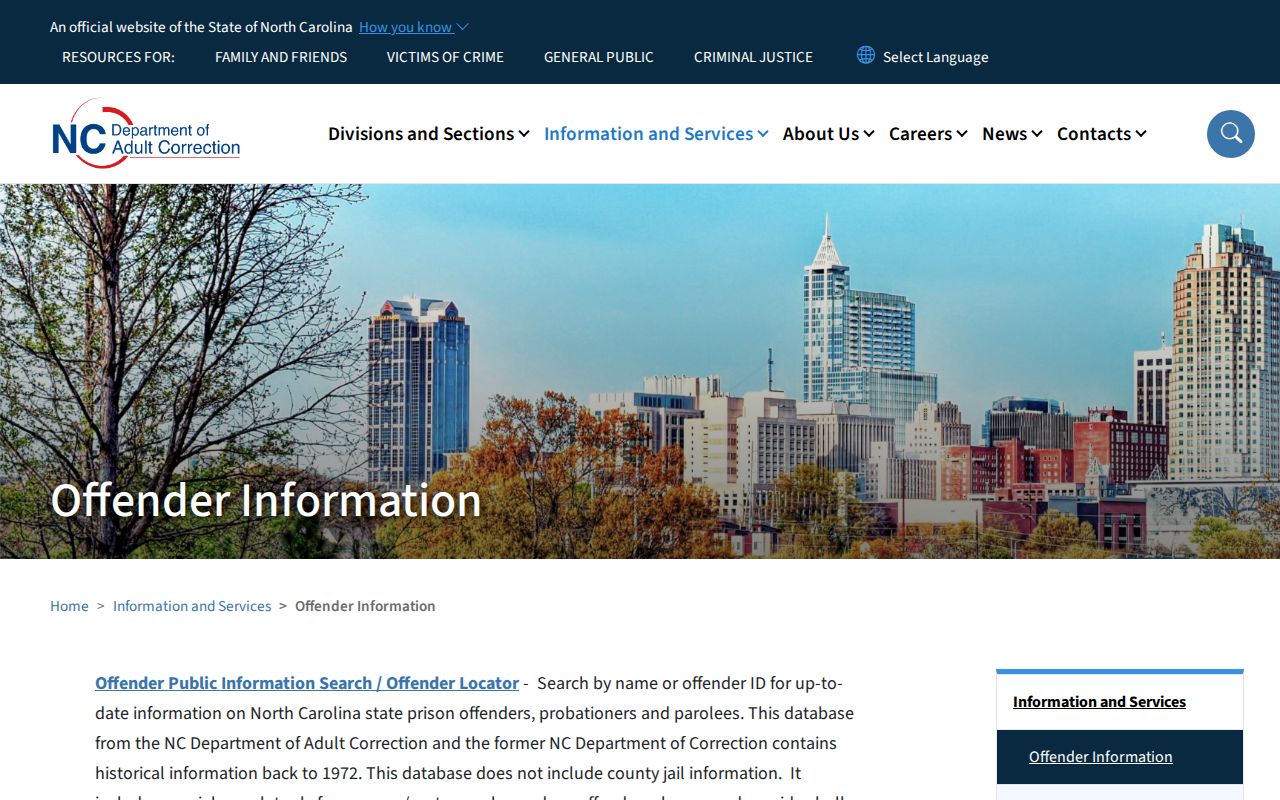
The gateway identifies OPI, release, and absconder tools while warning that county jail records are outside NCDAC coverage.
North Carolina Release Types
North Carolina records use terms that describe very different legal events. Bond releases a local detainee while a charge remains pending. Time served means the confinement credited to the case satisfies the ordered jail time. A dismissal may remove the case basis for custody, though another hold can remain. Probation is court-ordered supervision and may be imposed without a prison release. Parole is discretionary release for eligible older-law cases. Post-release supervision is the statutory supervision phase that follows many current felony prison terms.
A state sentence may also expire. In OPI, an incarceration period with a service status of EXPIRED and an Actual Release Date is stronger evidence of a completed period than a missing live-roster name. Still, another active period, warrant, detainer, or receiving custodian may control the person’s current status. Read each period, not just the first line.
| Event | Meaning | Next record source |
|---|---|---|
| Bond or time served | Departure from a county jail | Sheriff or regional jail |
| Post-release supervision | Prison portion ended; supervision continues | OPI and Community Supervision |
| Parole | Discretionary release for an eligible case | OPI and the Commission |
| Sentence expiration | The listed incarceration period ended | OPI actual-release history |
| Transfer | Custody moved to another authority | Receiving agency |
Read North Carolina Release Fields
A useful North Carolina release record identifies the person, the custody period, the event date, and the kind of exit. County formats vary, so a local response may use booking number, release date, release reason, and destination or transfer wording. OPI uses its own terms, including offender number, incarceration status, service status, last movement, projected release date, actual release date, supervision status, and Probation/Parole Office. Those fields should be read together.
| Field | What it establishes |
|---|---|
| Name and identifier | Distinguishes people with similar names |
| Releasing agency or facility | Identifies the record custodian and custody layer |
| Actual release date | Records a past state-prison custody event |
| Release type or movement | Separates community release from transfer |
| Service or sentence status | Shows whether the listed period is active or expired |
| Supervision status and office | Shows whether parole, probation, or post-release supervision continues |
The OPI search form accepts identifying details and a status scope.
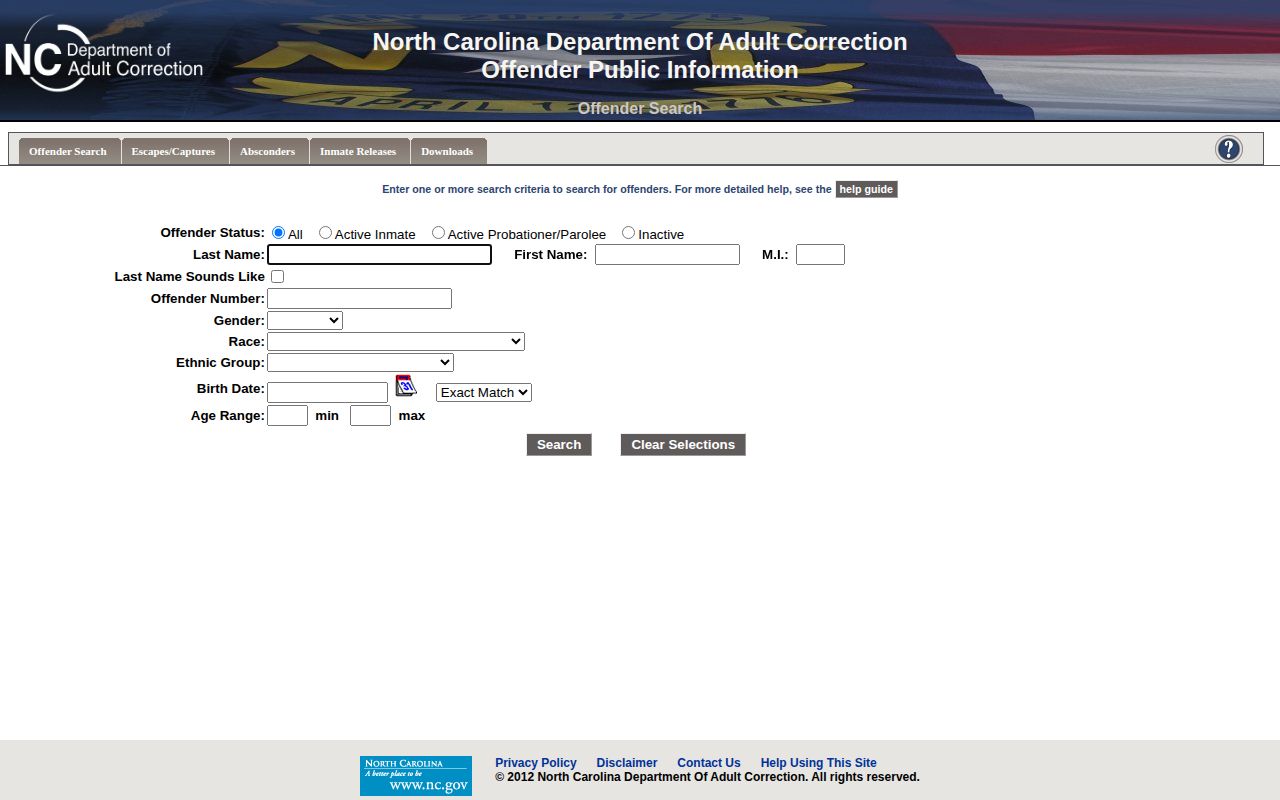
Selecting All or Inactive matters when a completed state case no longer appears among active records.
Request North Carolina Release Records
Start with the official online source because North Carolina law allows an agency to satisfy access by posting records online. If the needed public field is missing, send a narrow request to the agency that created it. NCDAC states that basic conviction, time-served, sentence-length, admission, and release-date information is public, while most offender-file material is confidential. A county sheriff, not NCDAC, holds county jail data. The filing-county clerk holds court records.
- Identify the custody layer and the agency that held the person.
- Search the official portal and save the access date, identifier, and exact status label.
- Name the existing fields sought, such as admission, movement, actual release, release type, and supervision start or end.
- Add a date range and ask for electronic delivery when practical.
- If material is withheld, ask for the statute supporting the redaction or denial.
The NCDAC public-records page explains the state route and links its request form.
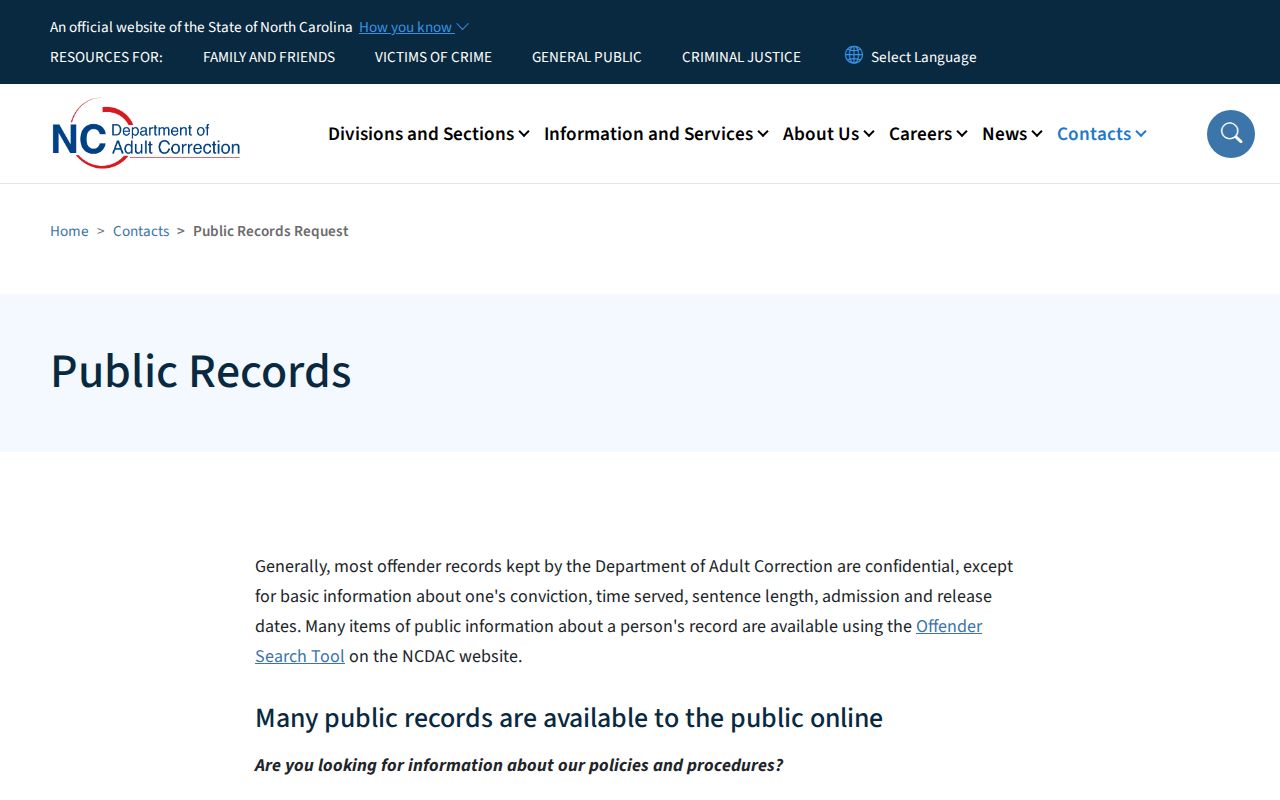
Chapter 132 requires access at reasonable times and copies as promptly as possible, but the research supports no single fee or fixed response deadline for every agency.
North Carolina Records Law
G.S. 132-1 defines public records broadly, subject to specific exceptions. G.S. 132-6 governs inspection and copies. It does not require a requester to state a purpose, and an agency may not deny all access merely because exempt and public information are mixed. Corrections, juvenile, medical, security, investigative, and expunction rules can still require withholding or redaction.
North Carolina G.S. 15A-502 authorizes fingerprints and photographs in defined arrest and commitment settings. A booking image proves an identification step, not the person’s current custody status. Retention and access also depend on the custodian and any valid sealing or expunction order. A vanished image or roster row should never be treated as proof that a legal record was erased.
Important: Ask for existing public fields. An agency need not create a custom report or decide the legal meaning of a release for the requester.
North Carolina Release Totals
Two official North Carolina figures describe different sets of exits. NCDAC’s FY 2023–24 Annual Statistical Report counted 20,109 prison releases. A separate calendar-year assessment counted 19,690 selected expiration-or-release-to-supervision exits in 2024. That assessment warns that one person may be counted more than once. Neither figure is a live count of unique people who are now free of all state control.
The date labels must stay with the numbers. One is a fiscal-year operational total. The other is a calendar-year assessment with a narrower exit definition and a repeat-count warning. Combining them would create a false trend. NCDAC’s About page, accessed August 12, 2026, separately described about 32,000 people in prison and more than 84,000 under supervision. Those are current approximate populations, not release totals.
The NCDAC agency overview supplies statewide context.
Keeping custody, supervision, fiscal-year releases, and selected calendar-year exits separate prevents an inaccurate statewide comparison.
Find North Carolina Released Inmates
A defensible search starts with identity and custody type. Use full name, date of birth, and an agency identifier when available. Search NCDAC OPI for a state prison, probation, or parole history. Search the sheriff or regional jail for a local booking. Use the court portal to explain the case outcome. Search BOP for a sentenced federal record and ICE ODLS for the limited immigration-custody window. Then compare dates and exact labels.
- Search OPI under All or Inactive for a completed state-prison period.
- Use the released-first NCDAC tool when county, month, year, or name is known.
- For a jail case, choose the holding county and request its release or movement record.
- Pair the custody event with the filing-county court disposition.
- Check Community Supervision, BOP, ICE, or VINELink only when that system fits the case.
The NCDAC Inmate Release Search is built around released records rather than a live prison roster.
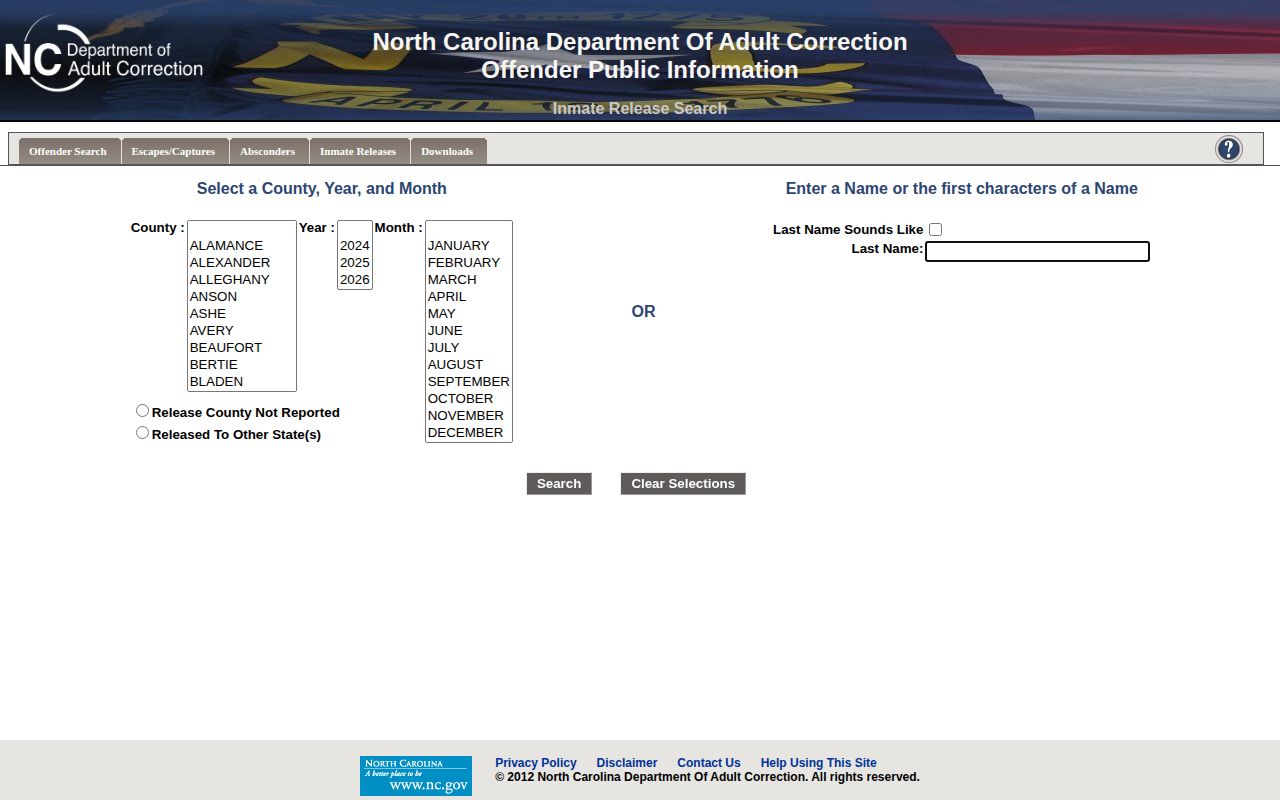
Its results can show release date, primary offense, and type of release, while the full OPI detail supplies the wider incarceration and supervision history.
When sources conflict, keep both observations and contact both custodians. For example, a county roster may stop showing a person before OPI records a state admission. That gap can reflect transport and data entry, not a community release. In another case, OPI may show an actual prison release while a supervision record remains active. Record the access date, portal name, person identifier, and the exact status text. This preserves what each official system actually said without forcing unlike events into one label.
Names also change and repeat. Search variants carefully, but confirm identity with a birth date or agency number before using a result. NCDAC’s history begins in 1972, while BOP’s online locator generally covers federal records from 1982 forward. Neither date range creates county coverage. If no online result fits, a precise request to the known custodian is stronger than guessing that the person was never held or has already been discharged.
Statewide North Carolina Court Records
North Carolina completed the Odyssey and eCourts conversion in all 100 counties on October 13, 2025. That change made the eCourts Portal gateway a truly statewide route for case information and dispositions. A disposition may explain why a jail release occurred, such as a dismissal, sentence, or bond change. It does not prove the precise door time, rule out another hold, or show that a transfer became a community release.
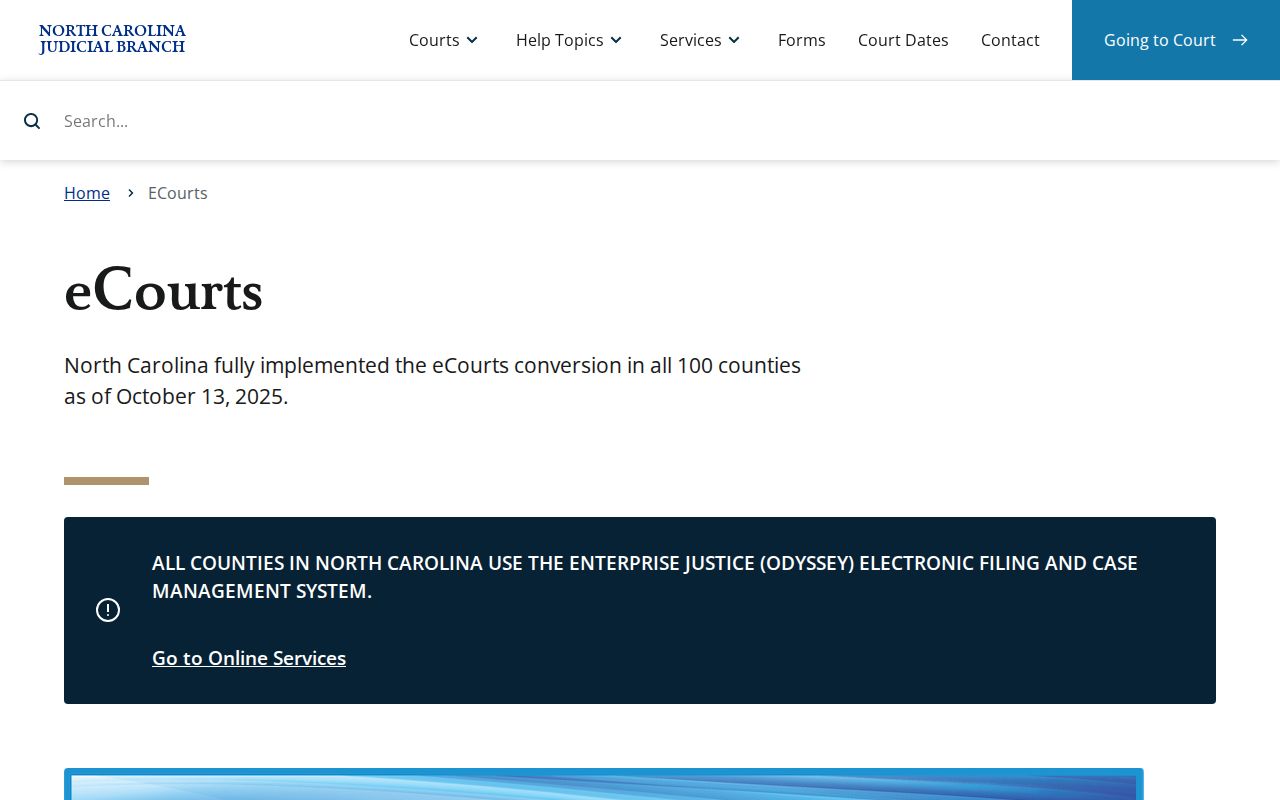
The clerk in the filing county remains the custodian for paper or certified court records, so Portal data and the jail’s movement record serve different purposes.
North Carolina and Federal Releases
NC SAVAN, also called VINELink, can send phone, email, text, or TTY notice for participating county jail, state prison, probation, parole, and registry records. An alert is a prompt to check the contributing custodian. It is not a certified release order, and feed timing can vary.
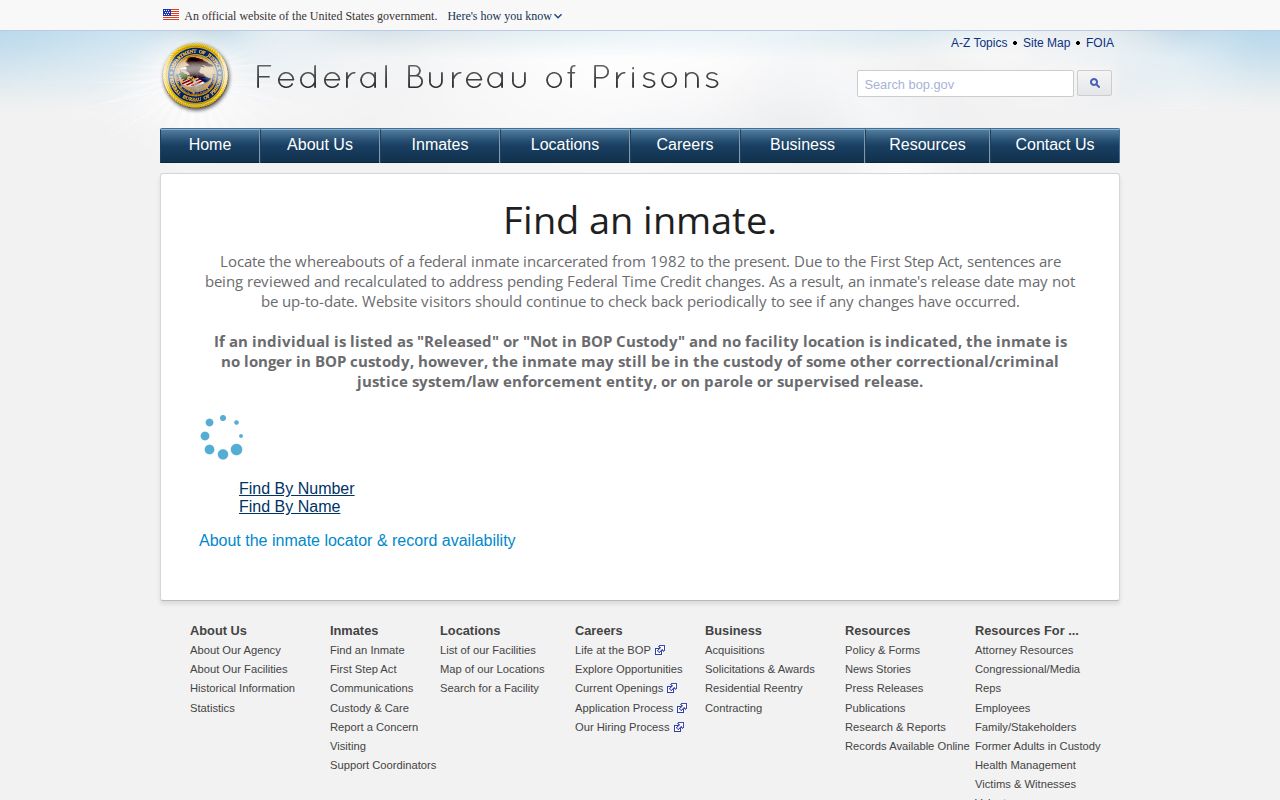
The Federal Bureau of Prisons locator covers federal records from 1982 forward. A BOP result marked RELEASED means the person is no longer in BOP custody. It does not rule out supervision or another authority. A future date is projected and may change; UNKNOWN means BOP cannot yet determine the term or date.
ICE ODLS has another scope: current ICE custody, qualifying CBP custody, and people released from ICE custody within the prior 60 days. A county handoff to ICE remains a transfer.
For ICE, an A-number search requires nine digits, so leading zeros may be needed, along with country of birth. The biographical search is the other route. ODLS does not search minors and is not a permanent history of state or county custody. For VINELink, use exact identifying data, select North Carolina, open the matching record, choose a notice channel, and complete any contact or PIN confirmation. A notice can arrive before another public page updates, which is why the holding agency remains the final source for the recorded event.
North Carolina Booking Photo Proposals
North Carolina considered special booking-photo bills in 2021 and 2025, but the research found no enacted statewide anti-pay-to-remove or Booking Photograph Privacy statute as of August 12, 2026. Senate Bill 660 from 2021 and Senate Bill 129 from 2025 must remain labeled proposals. A filed bill does not change current access law.
Actual requests remain governed by Chapter 132, the holding agency’s records, valid exceptions, and any expunction order. The practical point is narrow: check current law and the originating office rather than relying on summaries of a proposal. An old booking image also cannot establish whether a person is still held, has been released, or moved to another custodian.
North Carolina Release and Discharge Proof
No public statewide discharge-certificate lookup was found in the North Carolina research. An inactive OPI result, an expired service period, or a supervision end date can be useful portal evidence, but none should be renamed as a legal certificate. For formal proof, begin with the Community Supervision office shown in OPI and ask for the existing releasable record that documents termination or discharge. Confirm the office through the current statewide directory because staff and boundaries can change.
Prison release and supervision discharge are separate events. An actual release date records departure from prison for the listed incarceration period. A POST REL label can mean the person is outside prison while the statutory supervision phase continues. Probation may arise from a court order without a prison release, and parole applies to eligible older-law cases. A single date cannot answer all three questions: when physical custody ended, whether supervision began, and when the person’s state supervision ended.
County proof follows another route. Ask the sheriff or regional jail for the release or movement entry and the filing-county clerk for the case disposition. If the jail record shows a transfer, follow the receiving custodian rather than seeking a discharge record from the first jail. If an expunction or sealing order affects access, the absence of a public result should be described only as an access limit. It does not authorize a claim that no booking or custody event ever occurred.
A well-framed request names the person and identifier, gives a date range, and asks for the existing field that marks release, transfer, supervision start, supervision end, or discharge. The response date matters. OPI and local systems can change after a later movement, correction, revocation, or data update.
Match North Carolina Custody Sources
A person who drops off a live county roster may have left that jail, but the next step depends on where the person went. North Carolina release verification is strongest when the system’s scope matches the event. Use a current roster for present custody, a release or movement record for a past jail exit, OPI for a state correction history, and the federal tools only for their own jurisdictions.
| Source | Best use | Key limit |
|---|---|---|
| County jail roster | Current local custody | Released people often disappear |
| County release record | Local release or movement | One custodian at a time |
| NCDAC OPI | State prison, probation, and parole history | Excludes county jail records |
| eCourts | Case result and legal context | Not exact physical-release proof |
| BOP or ICE | Federal or immigration custody | Does not resolve North Carolina custody |
Use the County Directory to reach the proper sheriff-level site, and the statewide Facility Directory to identify county, state, federal, regional, juvenile, or historical facilities without confusing their record rules.
Juvenile custody requires special care. Adult public inmate searches do not become a substitute for confidential juvenile records. Closed and historic jails can still help identify an old custodian, but they should not be searched as active facilities. Regional jails may serve several counties, and counties without an independent jail may house people elsewhere. The physical facility, arresting county, filing court, and record custodian can therefore be different. Confirm each role before sending a request.
County variation is not an error by itself. One sheriff may publish a current roster but no release list. Another may expose recent movements, while a regional authority handles the actual detention record for several counties. Rural counties may use a receiving jail outside their borders. The statewide search path stays consistent only at the level of method: identify the custodian, find the official record, compare the exit type with the court case, and verify any supervision or receiving hold. The exact portal, fields, retention practice, and request channel remain local.
When no online release view exists, ask for the named person’s release or movement entry rather than a broad report. Include the booking number and date range if known. A response that says transfer should lead to the receiving authority. A response that says bond, time served, or dismissal should still be checked against the case disposition and any listed detainer.