
North Carolina Release Date Basics
The North Carolina Department of Adult Correction, or NCDAC, uses Projected Release Date as the official forward-looking label in Offender Public Information, commonly called OPI. It is a computed estimate within the state sentence. The Actual Release Date is retrospective. It records the custody event after the person leaves the relevant period of imprisonment. Those dates answer different questions, so they should never be swapped.
A sentenced prisoner can have a projected date. A person held before trial generally cannot because no final jail or prison term has been imposed. A court date, bond change, dismissal, time-served order, or detainer can decide when that county detainee leaves. For a state prisoner, the sentence structure, confinement credit, earned time, consecutive terms, revocation, and statutory post-release point can all affect the estimate.
The NCDAC agency overview identifies the department responsible for North Carolina prisons and community supervision.
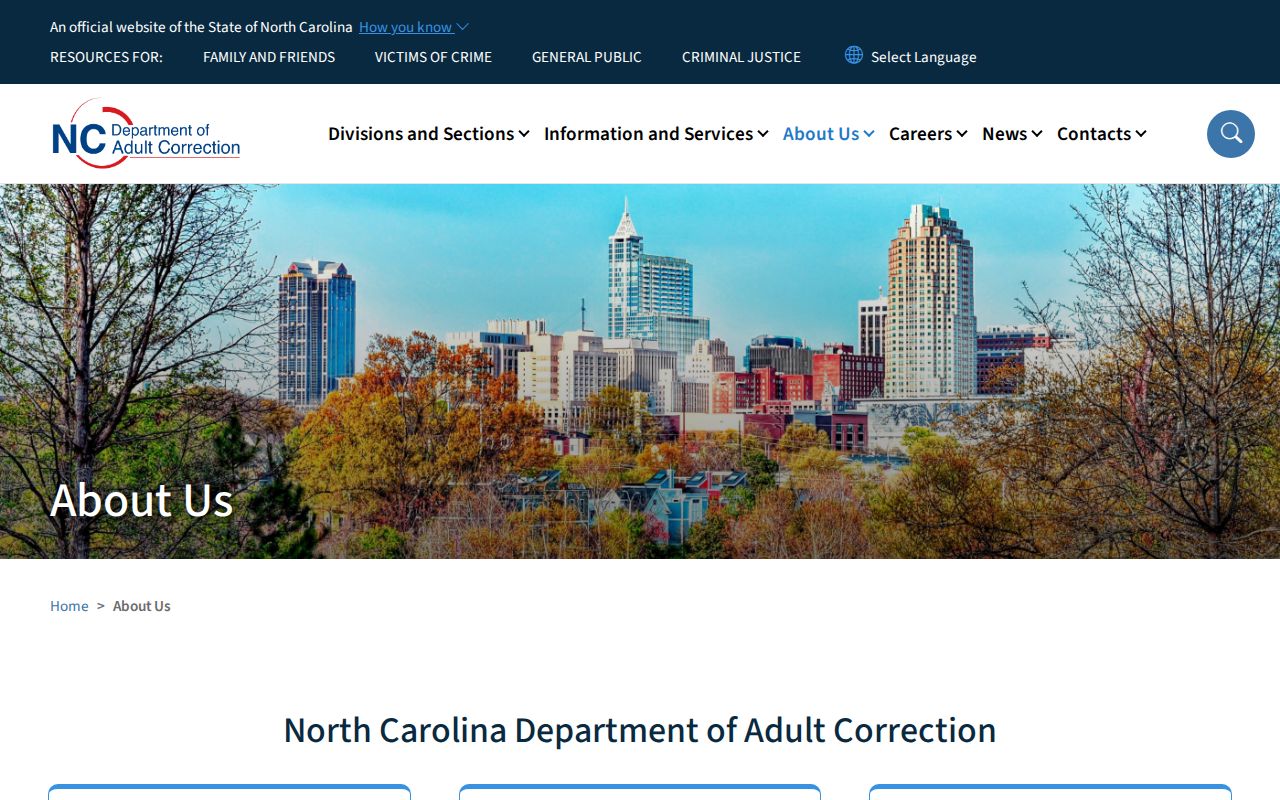
This agency scope matters because NCDAC does not own county-jail release records.
Find a North Carolina Release Date
Begin with the NCDAC Offender Public Information Search for a person who served a North Carolina state-prison term. OPI contains current and historical state prison, probation, and parole information dating to 1972. It does not contain county-jail records. Use exact identifiers when possible, since a shared name can return more than one person.
- Open OPI and choose a status scope. Use All when it is unclear whether the state record is active or inactive.
- Search by offender number when known. Otherwise enter the name carefully and compare every returned identifier.
- Open the matching record. Confirm that the identity and incarceration period are the right ones before reading a date.
- Locate Projected Release Date, then read incarceration status, sentence status, last movement, supervision information, and any other active period.
- Save the date of access and the exact portal labels. Return later if the projected date or custody status is still subject to change.
The official OPI search screen shows the statewide entry point for that check.
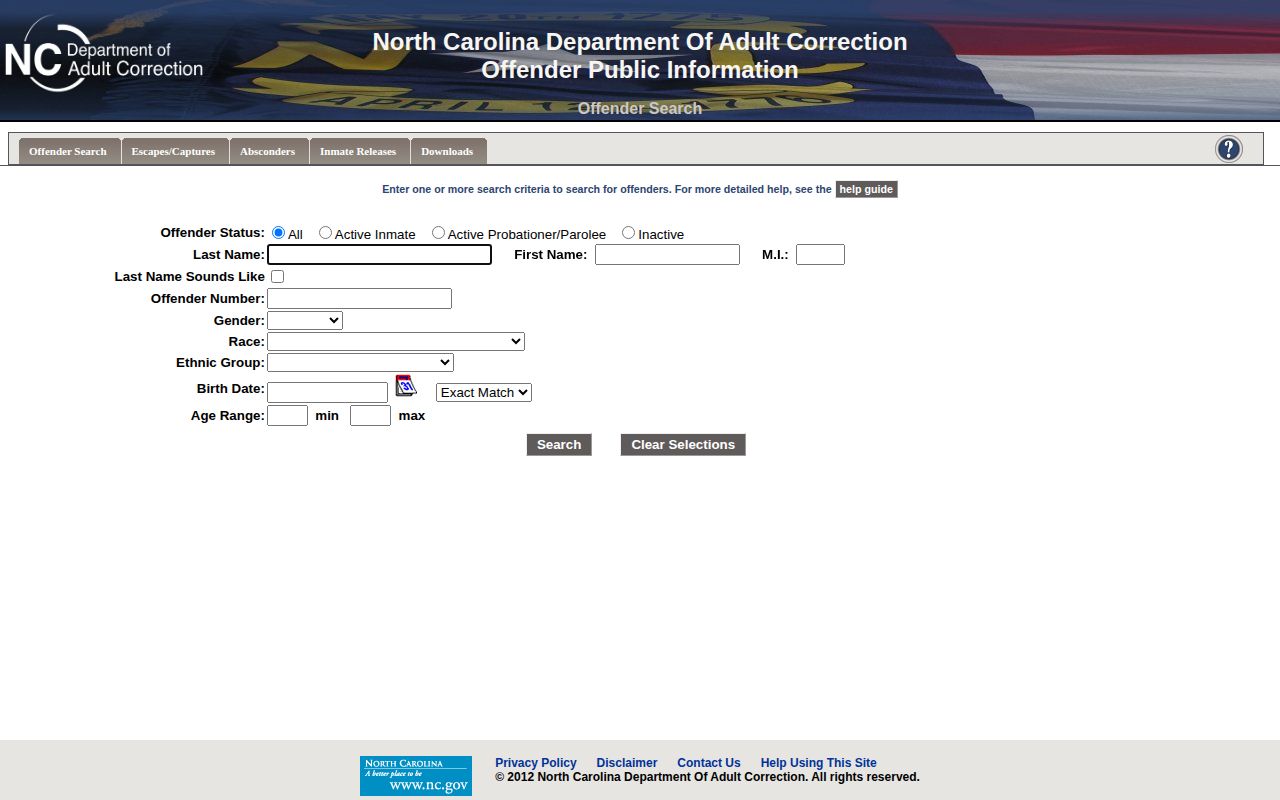
The result must be opened and reconciled; a name in the result list alone does not establish the date or the present custody state.
For a deeper account of the fields and inactive records, use the NCDAC offender search page. A county sentence belongs with the sheriff, regional jail, or county records custodian found through the County Directory, not with NCDAC.
Note: Record the access day because a valid North Carolina projected release date can change after the search.
Reading North Carolina OPI Dates
A projected date must be read within the specific incarceration period. OPI may show a person outside prison yet still active under supervision. The label POST REL, or post-release supervision, means the person has left the prison portion but has not necessarily completed the sentence relationship. An incarceration period marked EXPIRED with an actual release date points to a completed period, though another period or hold can still remain.
| OPI field or label | What it establishes |
|---|---|
| Projected Release Date | The current estimate for the relevant state-prison period; it may move. |
| Actual Release Date | The recorded exit date for that incarceration period. |
| POST REL | The prison portion ended, but state supervision remains active. |
| EXPIRED | The displayed service period ended; check for another active period. |
| Release type | The kind of exit, such as expiration, post-release supervision, or eligible parole. |
| Last movement | Context that helps distinguish community release from a transfer. |
North Carolina also offers a released-first inmate search by name or county and time period.
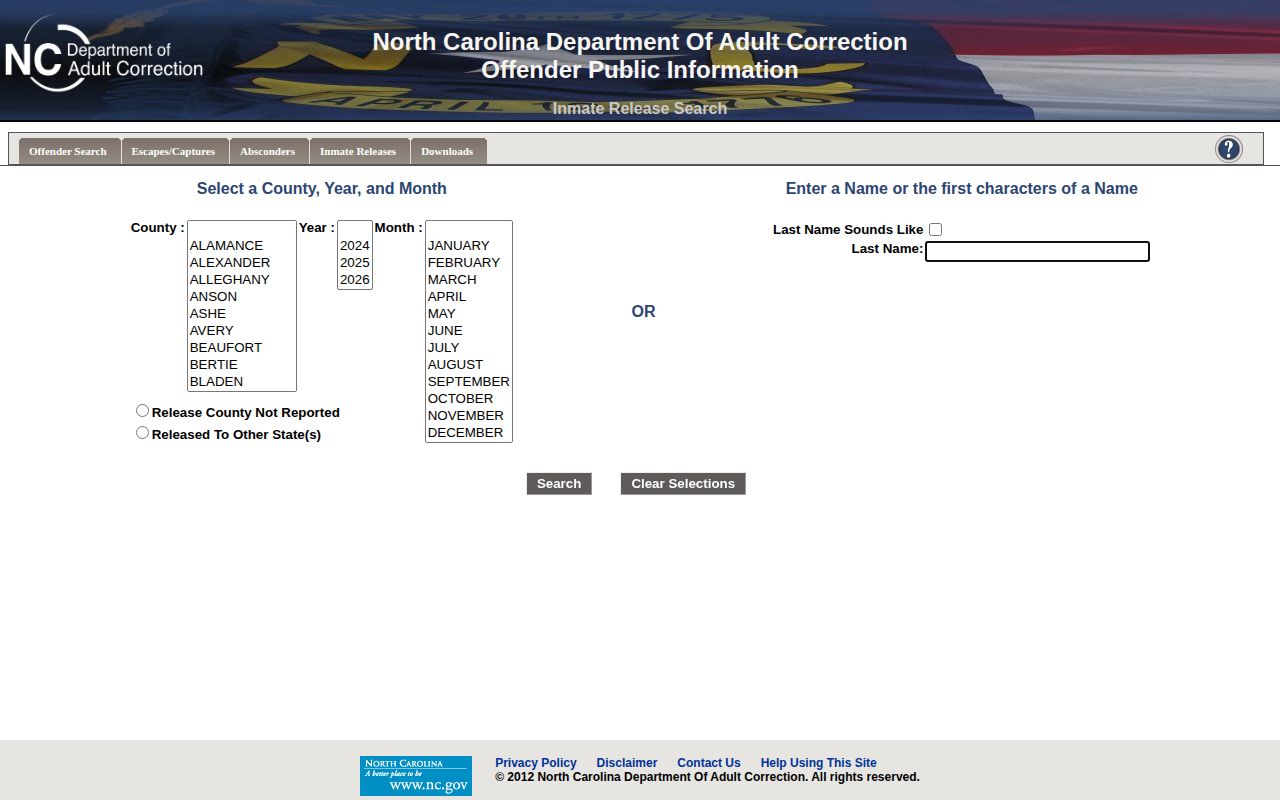
That search returns release date, primary offense, and release type, making it useful after the projected event should have passed.
North Carolina Earned-Time Rules
North Carolina does not use one simple percentage that a reader can safely apply to every sentence. G.S. 148-13 directs the NCDAC Secretary to make rules for earning and forfeiting time under the felony and misdemeanor sentencing laws. Earned time works inside the imposed term and the statutory release framework. It is not a separate promise of early community release.
| Rule | Effect on a release estimate |
|---|---|
| G.S. 15A-1340.13(d) | Governs earned time within a felony sentence. |
| G.S. 15A-1340.20(d) | Allows no more than four earned-time days per month for misdemeanants. |
| G.S. 15-196.1 and 15-196.3 | Govern confinement credit, a distinct credit for qualifying time already confined. |
| Article 84A | Places eligible felony release within the statutory post-release supervision structure. |
Section 15A-1368.2 ties the release point to the maximum term, the applicable supervision subtraction, and earned time. Offense class and registration status can affect the supervision period. Consecutive sentences and revocations add more context. The official OPI calculation should therefore be used instead of a home calculation based on a broad truth-in-sentencing slogan.
The NCDAC criminal search gateway explains which official tools cover offender and release information.

Its scope notice helps prevent a county-jail date from being forced into a state-prison search.
Why North Carolina Dates Change
A North Carolina projected release date can move when the inputs or legal posture change. Some events alter sentence credit. Others do not shorten the term at all but change which agency will hold the person next. An exit to another prison, a federal authority, or immigration custody is a transfer rather than community release.
| Factor | How to read it |
|---|---|
| Earned-time award or forfeiture | Credit earned or lost under NCDAC rules can alter the estimate. |
| Confinement credit | Qualifying prior custody may be credited under the sentencing statutes. |
| Consecutive term | Another sentence period can keep custody active after one period ends. |
| Revocation or court order | A later legal event may alter custody or the time still to serve. |
| Detainer or receiving authority | The person may leave NCDAC but remain in another agency's custody. |
| Legacy parole decision | An eligible older-law case may follow the Commission's discretionary process. |
Victim Support Services may provide registered victims notice of a projected date and another notice about 60 days before release. Such notice is an advance service, not a replacement for the later actual-release record.
Parole is another term that requires care. North Carolina ended discretionary parole for offenses committed on or after October 1, 1994 under Structured Sentencing. Most eligible newer felony cases reach a statutory post-release point rather than a discretionary parole date. The Post-Release Supervision and Parole Commission still handles eligible older-law parole cases and sets conditions for statutory supervision. Eligibility alone does not set or guarantee a release.
Note: A transfer date records movement between custodians and must not be described as a community release date.
County and Federal Date Routes
A local jail sentence is computed by the county or regional jail in light of the court order and any local credit. A pretrial detainee may leave on bond, dismissal, time served, or transfer, none of which creates a long-range NCDAC projected date. Ask the jail custodian for the existing booking, movement, and release fields, then compare the filing-county court disposition when the legal cause matters.
Federal dates belong in the Bureau of Prisons locator. A future BOP release date is projected and may change after sentence-credit recalculation. A past date paired with RELEASED means the person is no longer in BOP custody, not that all supervision or other custody ended. ICE's locator serves current or recent immigration custody and is not a permanent state-prison history.
- Projected date
- A changeable estimate for a sentenced custody period.
- Actual date
- The date an exit from that custody period was recorded.
- Detainer
- A request or legal basis for another authority to take or hold custody.
- Discharge
- The end of the applicable sentence or supervision relationship, not merely the prison portion.
North Carolina Discharge Allowance
North Carolina supplies one concrete release-day rule, but it is narrow. G.S. 148-13 authorizes NCDAC rules for cash and clothing when a person is discharged or paroled. It requires at least $45 in cash for a person discharged or paroled after incarceration of two years or longer. That statutory floor does not prove that every person leaving a shorter term receives the same amount.
The law also does not support a promise of a bus ticket, a fixed clothing package, or one statewide exit procedure. Facility practice and the legal type of exit matter. Most important, the discharge allowance does not determine the projected release date. It concerns eligible release-day support after the sentence and custody rules have produced the exit.
The NCDAC institutions directory identifies the state facilities within the prison system.
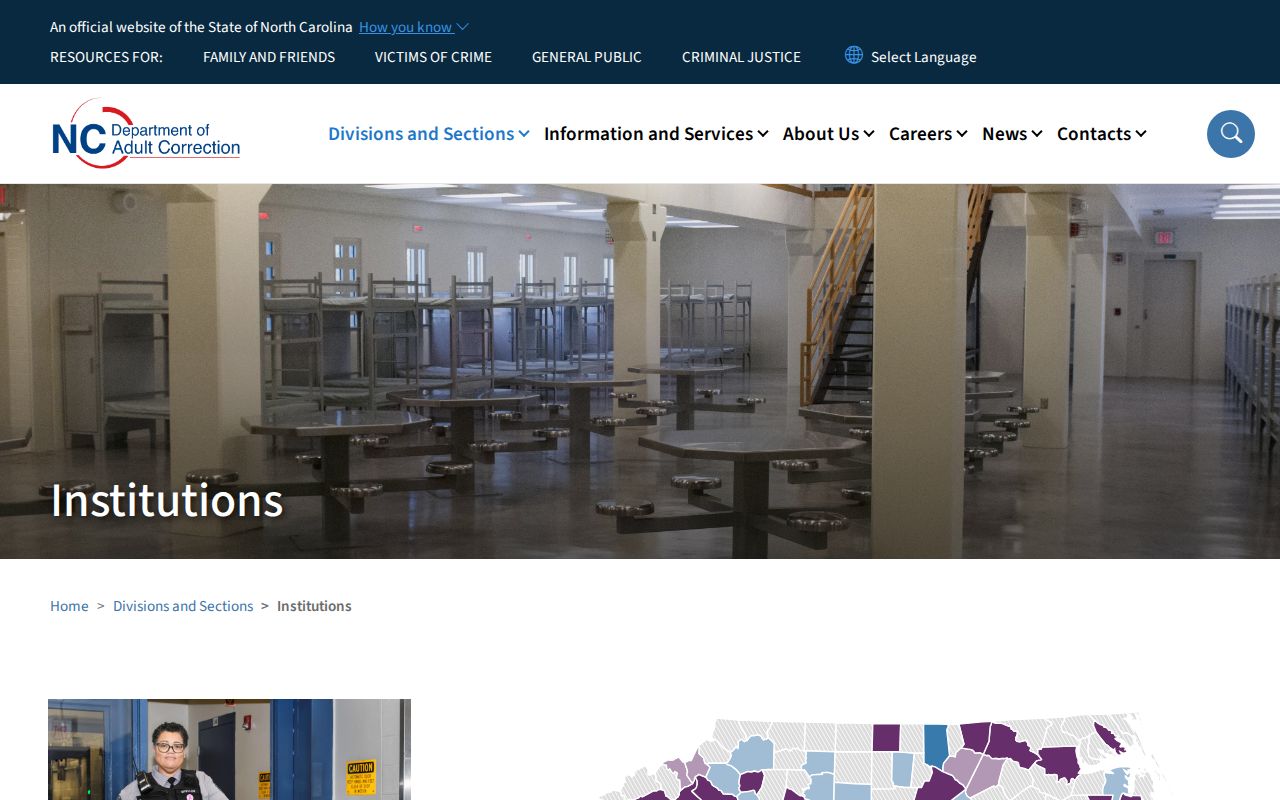
Facility identification helps place an OPI date in the correct state-custody setting without assuming a universal release desk or travel plan.
North Carolina Date Record Requests
When OPI does not resolve a disputed date, North Carolina public-record law supplies a focused fallback. Chapter 132 defines public records broadly, subject to specific exceptions. G.S. 132-6 requires inspection at reasonable times and copies as promptly as possible. An agency may provide access online. It may also separate public material from confidential material rather than deny every field solely because both types appear in one file.
NCDAC says most offender records are confidential, but basic conviction, sentence length, time served, admission, and release-date information is public. Start with OPI because it is the agency's online access route. If the needed release or movement field is missing, ask for an existing, narrowly defined record. NCDAC is not the custodian for a county jail record or a filing-county court record.
- Identify the person by full name and NCDAC offender number when known.
- Name the specific incarceration period or supply a useful date range.
- Request the existing admission, movement, projected date, actual release date, release type, and supervision start or end fields.
- Ask which record shows whether the exit was community release or transfer to another custodian.
- Request electronic delivery and preserve the agency response date and any stated basis for redaction.
A request should not demand an “entire inmate file” or ask the agency to calculate a new legal date. The goal is the releasable source record behind the public status. Corrections, medical, security, investigation, juvenile, and privacy rules can still require withholding. If the dispute concerns a local sentence, send the same focused field request to the sheriff or regional jail and obtain the court disposition from the filing-county clerk.
Confirm North Carolina Release Dates
Confirmation takes two stages. Before the event, save the exact projected date, status, incarceration period, and access day. Register through the VINELink Release Check when a custody-change alert is useful. After the event, return to OPI and look for the actual date, release type, last movement, and supervision status. An alert should prompt the check; it is not a certified release order.
If OPI and an alert disagree, contact the contributing custodian. Ask NCDAC about the state-prison record, the sheriff or regional jail about county custody, and the proper federal agency about federal or immigration custody. Report both dates and their labels while the conflict is unresolved. Do not choose the date that seems most convenient.
A person with an actual prison release and active POST REL status has left prison while remaining under state supervision. That is a release from confinement, not full discharge. A later inactive or end status can help document completion, though no public statewide discharge-certificate lookup was found.
Keep the final description narrow. “NCDAC OPI displayed an actual release date and active post-release status on the access day” preserves both facts. It does not claim that supervision ended, that another hold cleared, or that the person received a legal discharge certificate. Exact portal language is more reliable than a broad summary.