
North Carolina Parole and Probation
Parole, probation, and post-release supervision all involve oversight outside prison, but they begin in different ways. Probation is ordered by a court, often instead of an active prison term. Parole is discretionary release for people who remain eligible under older North Carolina sentencing rules. Post-release supervision is the statutory phase that follows the prison portion of many sentences under Structured Sentencing. The North Carolina Post-Release Supervision and Parole Commission sets conditions for parole and post-release supervision, while the North Carolina Department of Adult Correction, or NCDAC, operates Community Supervision in the field.
The label matters when checking a released person. Someone may have left prison and still appear as an active probationer or parolee. An NCDAC record can show Inmate Status: POST RELEASE/PAROLE while supervision remains active. A completed incarceration period may instead show an actual release date and an expired service status. Those facts describe different stages, so neither an old prison term nor the word “release” should be read alone.
| Supervision type | How it begins | Best verification route |
|---|---|---|
| Probation | A court orders community supervision | NCDAC OPI status, court record, and the listed Community Supervision office |
| Parole | The Commission grants release in an eligible older-law case | NCDAC history, Commission information, and the assigned office |
| Post-release supervision | State law places an eligible person under supervision after prison | NCDAC release and supervision fields plus the assigned office |
- Parole
- Discretionary early release from prison for a person whose case remains eligible.
- Probation
- Court-ordered supervision in the community, often used instead of incarceration.
- Post-release supervision
- A required supervision phase after the prison portion of a qualifying sentence.
- Discharge
- The formal end of the relevant correctional or supervision obligation.
Verify North Carolina Post-Release Supervision
The official starting point is the NCDAC Offender Public Information search. It covers current and historical state-prison, probation, and parole information back to 1972. It does not contain county jail records. Search by the seven-digit offender number when known. Otherwise, use the full name and compare date of birth, conviction county, docket, offense history, and other identifying fields. The Sounds Like option can widen results, but it also increases the need for identity checks.
The official NCDAC search gateway shows how the agency separates its offender, release, and absconder tools. Its scope is visible in the official view below.
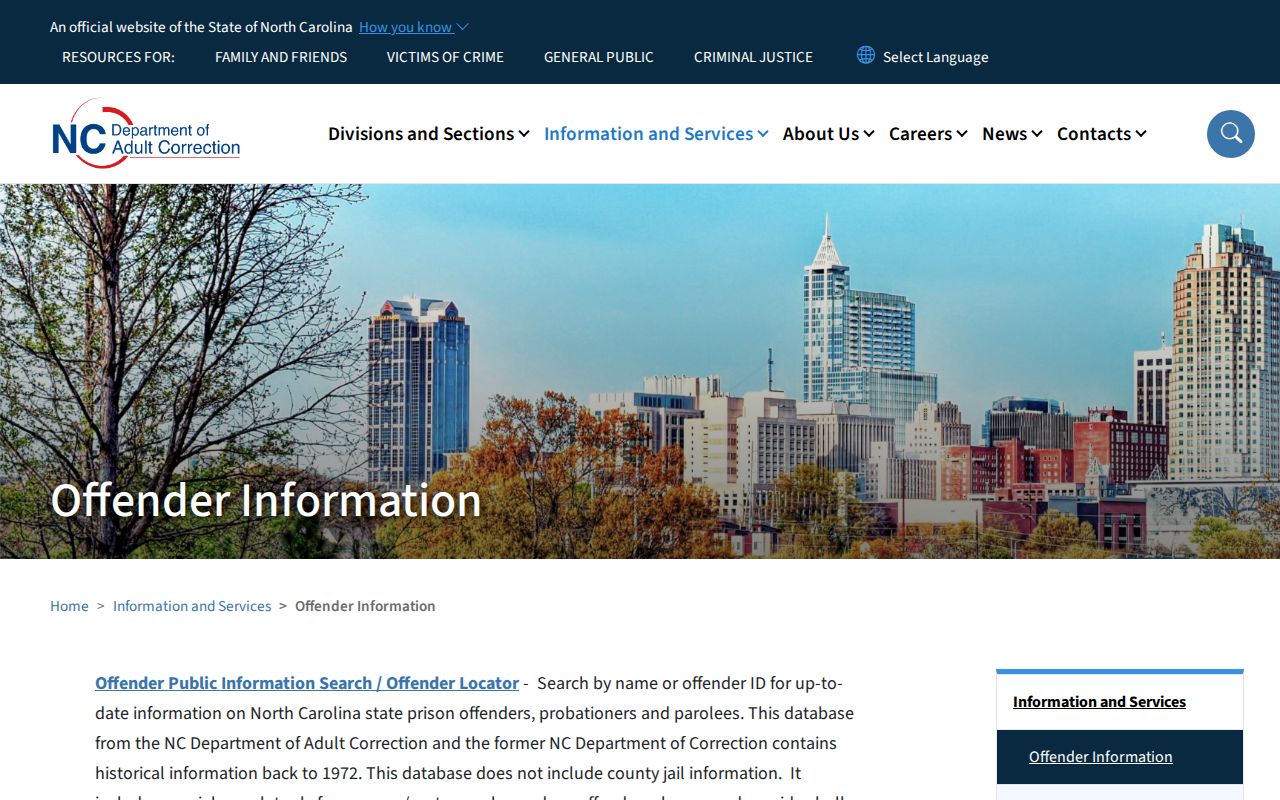
This gateway helps choose a supervision record rather than treating a county custody roster as a statewide parole or probation search.
- Search OPI with the offender number, or use the strongest mix of name and identity fields available.
- Open the matching record and read incarceration status separately from supervision status.
- Look for the Probation/Parole Office, actual release date, parole dates, and active or inactive supervision label.
- Use the statewide office directory to locate the current office instead of relying on an old staff name.
- Record the access date, then ask the assigned office to confirm any status that affects a current legal or personal matter.
Note: A person who appears only in a county jail record may have no OPI entry because NCDAC does not keep local jail records.
North Carolina Supervision Office Routing
NCDAC’s Community Supervision division reports four judicial divisions, 30 districts, offices in every county, 273 field offices, and more than 2,000 probation and parole officers. This is a statewide network rather than one central case desk. The office named in OPI is a strong lead, but boundaries and personnel may change. The current judicial divisions, districts, and local offices directory is the safer route to a current contact.
The official Community Supervision page presents the agency’s statewide structure.
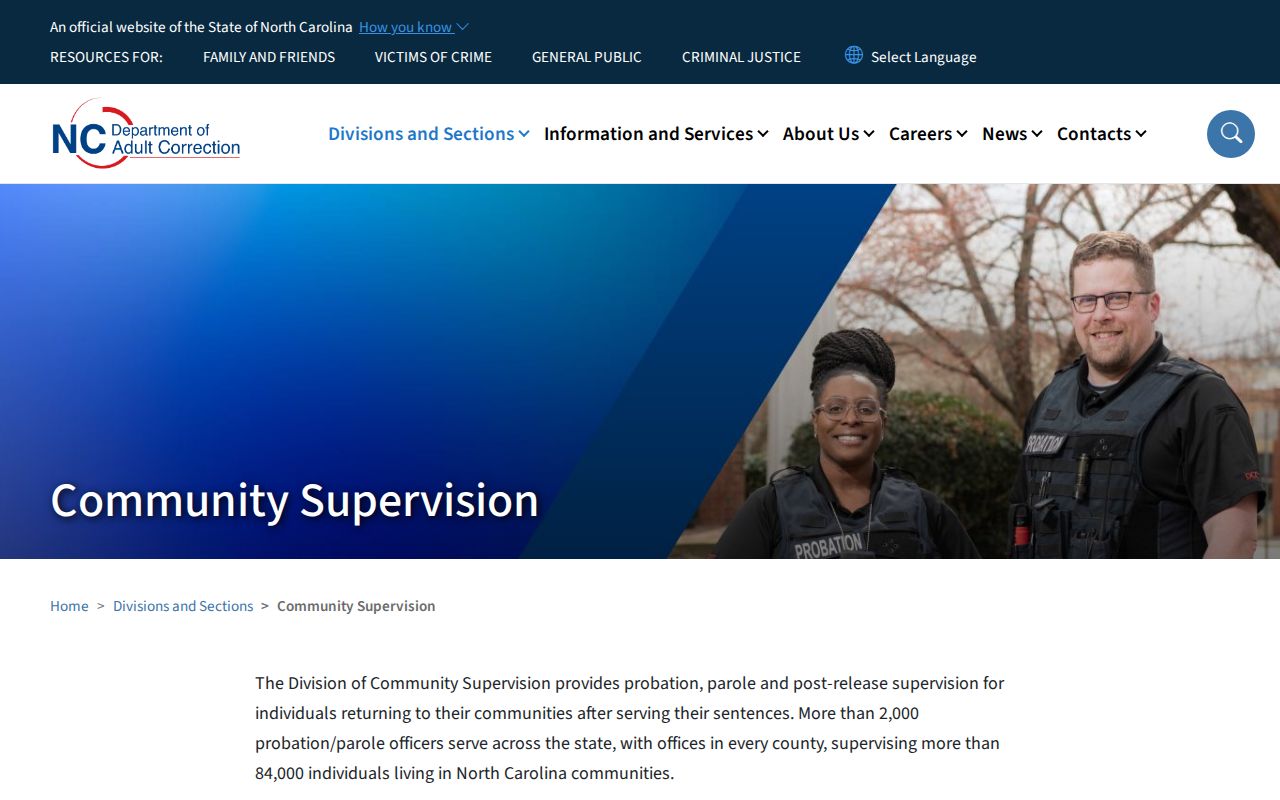
The directory should be checked after OPI because the case record identifies the relevant office while the directory supplies current routing.
NCDAC Community Supervision
Local routing: Use the judicial division, district, and local office directory
Case verification: Start with the office shown in the matching OPI record
Do not assume the conviction county, release county, and supervising county are always the same. A person may live or report in a different district. If the OPI office and directory appear inconsistent, provide the offender number and ask Community Supervision to identify the current assigned office.
North Carolina Absconder Record Limits
An absconder is a person whom Community Supervision lists as having stopped reporting or otherwise left supervision without authorization. NCDAC provides an official absconder search, but its result is a status lead, not a live location roster. The agency warns that listings may temporarily include people incarcerated outside North Carolina, abroad, or deceased while removal is pending. A match therefore requires confirmation rather than a claim about where the person is now.
Search the exact person, compare identifiers, and note the page’s access date. Then contact Community Supervision. NCDAC publishes an absconder tip line at 1-888-646-0024. Absence from the search does not prove successful discharge, just as presence does not prove a present location. A warrant or other court matter may require a separate check with the issuing authority.
The broad NCDAC agency overview places Community Supervision beside the state’s prison operations.
That statewide scope is why NCDAC can connect a prison release to active supervision, while a sheriff’s roster cannot settle the same question.
North Carolina Supervision Changes
Conditions are the rules that govern a person’s period of supervision. The court sets probation, while the Commission sets conditions for parole and statutory post-release supervision. A violation is an alleged failure to follow an applicable condition. It does not by itself show that a person returned to prison, and a custody entry does not always mean supervision ended. Read the latest supervision status, incarceration history, movements, and court record together.
North Carolina also uses confinement in response to violation, often shortened to CRV. A CRV placement is a defined period of confinement for a supervision violation. Leaving such a placement ordinarily returns the person to supervision rather than producing a full discharge. That distinction is another reason to avoid treating every facility exit as the end of supervision.
NC SAVAN, also called VINELink, can provide event notices for county jail inmates, state prisoners, probationers, and parolees. It is useful as an alert channel, but the contributing custodian remains the source to verify the event. A notification should lead back to OPI, Community Supervision, or the county facility that supplied the status.
North Carolina Supervision Status Fields
OPI places several layers on one person’s record. The latest incarceration status answers whether NCDAC still holds the person in prison. A separate supervision status answers whether probation, parole, or post-release supervision remains active. Sentence rows add commitment or conviction county, service status, sentence status, punishment type, term, docket, and offense details. The live OPI search form accepts status, name, offender number, demographic, birth-date, and age fields.
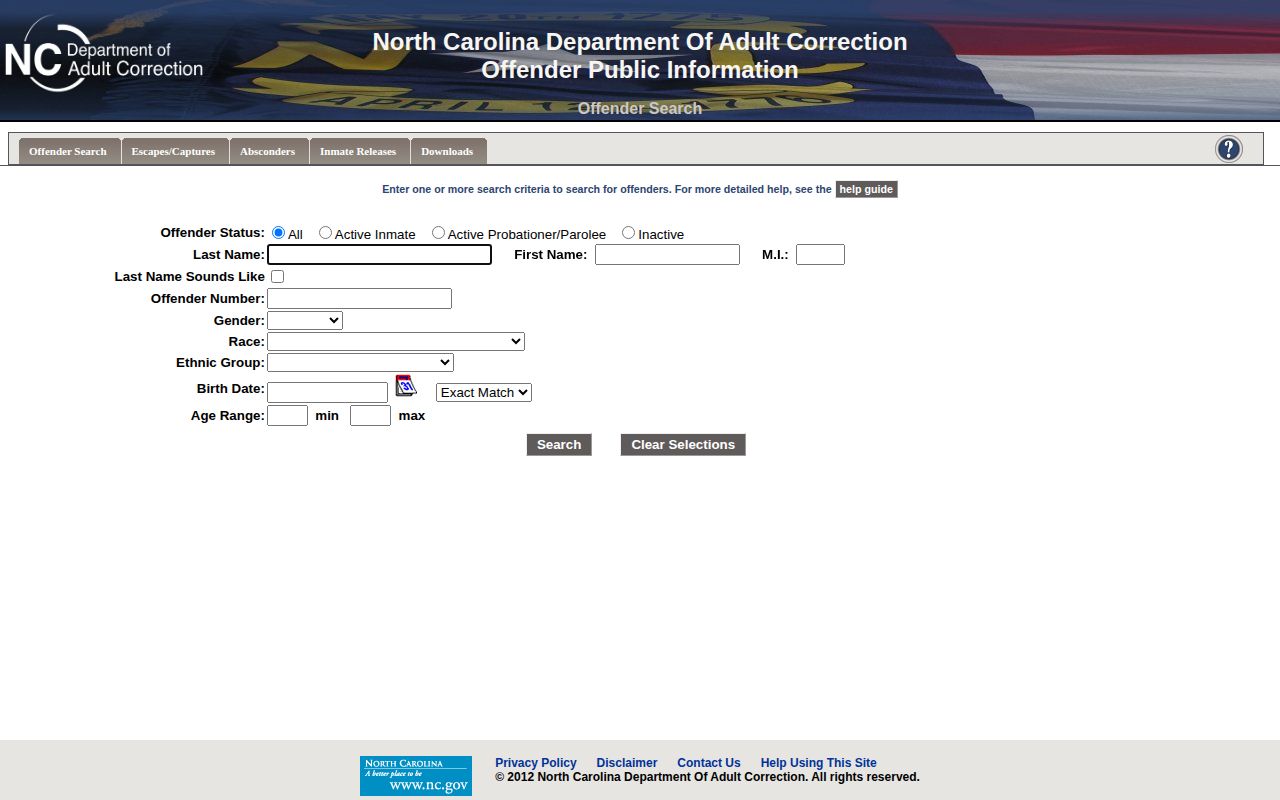
Use “All” when prison custody ended but supervision may still be active; “Inactive” is more useful when the whole state correctional relationship may be complete. A person can have more than one incarceration or supervision period. An older period marked EXPIRED may sit beside a newer active term. Likewise, an actual release date for one prison period does not prove that every sentence or supervision case ended. Start with the most recent event, then review each active period.
| OPI field | Question it helps answer | Reading caution |
|---|---|---|
| Incarceration status | Is the person held by NCDAC now? | It does not by itself settle county, federal, or ICE custody. |
| Supervision status | Is a state community case active? | Confirm current details with the listed office. |
| Actual Release Date | When did the recorded prison exit occur? | Release from prison can precede final discharge. |
| Probation/Parole Office | Which office is tied to the record? | Use the live directory because office routing can change. |
| Service Status: EXPIRED | Did that specific service period end? | Check for another active period or hold. |
The state’s direct release search serves a different task. It can find prison releases by county, year, and month or by name, but “release county” is only a search field. It is not proof that a county jail released the person. For supervision, the full OPI detail and the assigned office remain the better pair. Movement history can also reveal whether the event was a community exit or a transfer to another custodian. When two sources conflict, state both results, preserve each access date, and ask the relevant custodians to reconcile them.
North Carolina Supervision Notifications
NC SAVAN has unusually broad statewide coverage. NCDAC says the service includes county jail inmates, state prisoners, probationers, parolees, and registered sex offenders, with telephone, email, text, and TTY notification. A user selects North Carolina in VINELink, searches the person with exact identifiers, opens the matching record, chooses a notification channel, and completes the required contact or PIN confirmation. Its value is notice of a possible event, not certification of the legal result.
The state fact sheet for January through June 2023 reported more than 280,000 searches and 40,000 new registrations per month on average, plus nearly 800,000 notifications during the six-month span. Those dated figures measure service use. They are not a current supervision count, and they do not support a promise that every county update arrives at once. Feed timing and displayed fields can vary.
After an alert, return to the source that supplied the event. Use the county jail for a local custody change, OPI and Community Supervision for a state parole or probation change, and the court for a related order. If the alert and official record disagree, preserve the alert time and ask the contributing agency to confirm the latest status.
Confirm North Carolina Supervision Discharge
No public statewide discharge-certificate lookup was found in the North Carolina research. An inactive OPI record or a supervision end date is useful portal evidence, but it is not the same as a formal certificate. For a record that documents termination or discharge, contact the office shown in OPI and ask for the existing releasable record. State the person’s name, offender number, known supervision type, and relevant date range.
NCDAC says most offender records are confidential, while basic conviction, time-served, sentence-length, admission, and release-date information is public. Its Public Records page directs requesters to online sources first and provides a request form for records not already available.
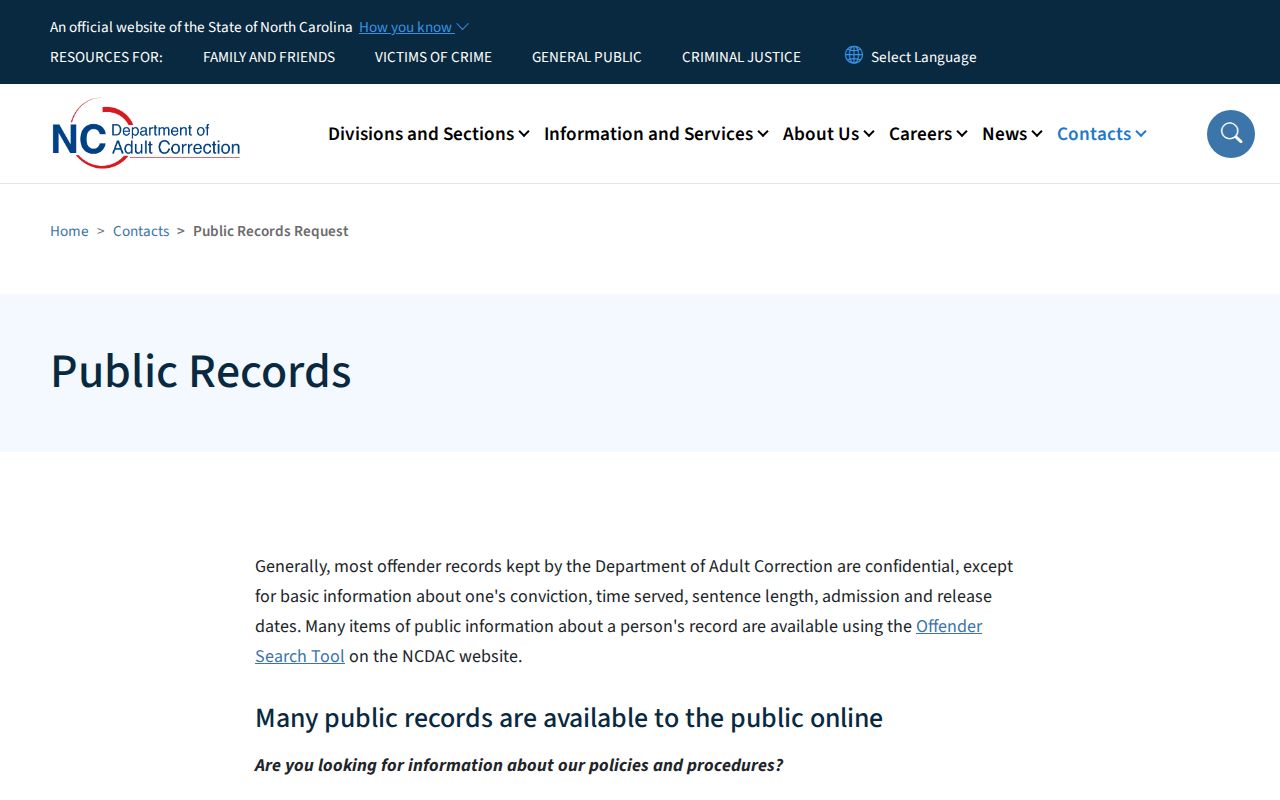
A narrow request for an existing supervision start, end, termination, or discharge record is more precise than asking for an entire correctional file.
Chapter 132 governs access to North Carolina public records, subject to corrections and privacy exceptions. The agency may redact or withhold protected material. If a county jail exit is the only known event, send the request to that sheriff or regional jail instead. The statewide North Carolina released-inmate search path explains why county, state, federal, and immigration custody records must be checked at their proper layer.