
North Carolina Parole Commission Reviews
The official authority is the North Carolina Post-Release Supervision and Parole Commission. It decides discretionary parole for people whose cases remain eligible under older sentencing law. The Commission also sets conditions for post-release supervision under current Structured Sentencing. Those functions are related, but they are not the same. A parole vote determines whether an eligible older-law prisoner receives discretionary release. Statutory post-release supervision follows the prison part of many newer sentences without a discretionary choice about whether the statutory release point exists.
The Commission’s 2024 manual explains that analysts prepare files and commissioners vote on the record. Commissioners do not conduct conventional formal parole hearings and ordinarily do not meet the person under review. Case and review records have confidentiality protections. The public record is therefore narrower than a courtroom docket. It includes the Commission’s public explanations, monthly discretionary-review reports, and any status changes that later appear in NCDAC’s offender database.
The NCDAC agency overview places the Commission within the state correctional system.
This agency setting helps explain why parole review results and prison-release status are found in linked state systems rather than in a county court calendar.
No North Carolina Parole Hearing Calendar
North Carolina does not publish a conventional future decisional-hearing calendar because the Commission does not hold that type of parole hearing. There is no official page to search by a future courtroom date, facility, or inmate name. A missing calendar is not a broken link or a records gap that should be filled from an unofficial source. It reflects the state’s file-review process.
The Commission offers Tuesday information meetings for victims and members of the public, arranged under its published process. These are opportunities to provide information. They are not public decisional hearings, and the meeting date should not be described as the date commissioners vote on parole. The Commission’s Victim Guide explains the meeting route and appointment timing. Use the following sequence when trying to identify the relevant review period.
- Confirm the person in NCDAC OPI with an offender number or a careful identity match.
- Review the offense and sentence history to see whether parole eligibility is plausible.
- Check the Commission’s monthly discretionary-review archive for the likely month.
- Use the Commission contact route for process questions that the public reports do not answer.
- Return to OPI to verify whether any approved release later became an actual custody event.
The official criminal offender searches page shows the state routes used to connect parole questions with correctional status.
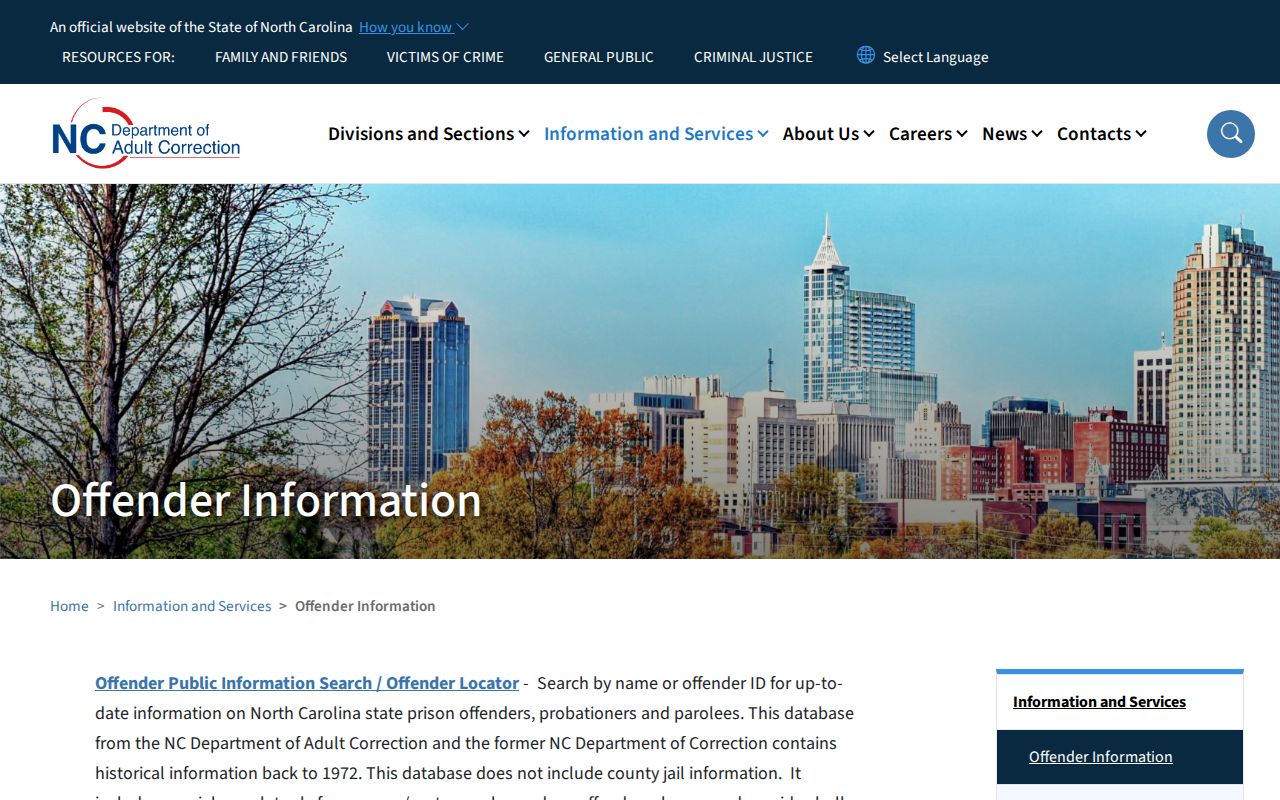
It also makes the county-jail boundary clear: NCDAC does not possess local jail records, so a county release is not evidence of a Commission parole decision.
North Carolina Parole Review Results
The Commission’s Discretionary Parole Reviews archive is the closest public substitute for a hearing-results calendar. Monthly publication began in September 2024. As accessed August 12, 2026, the archive listed 2026 reports through June. Each report is a monthly results product, not an interactive named-person case search. The access month matters because later reports may be posted after a reader last checked.
The official monthly archive is shown below.
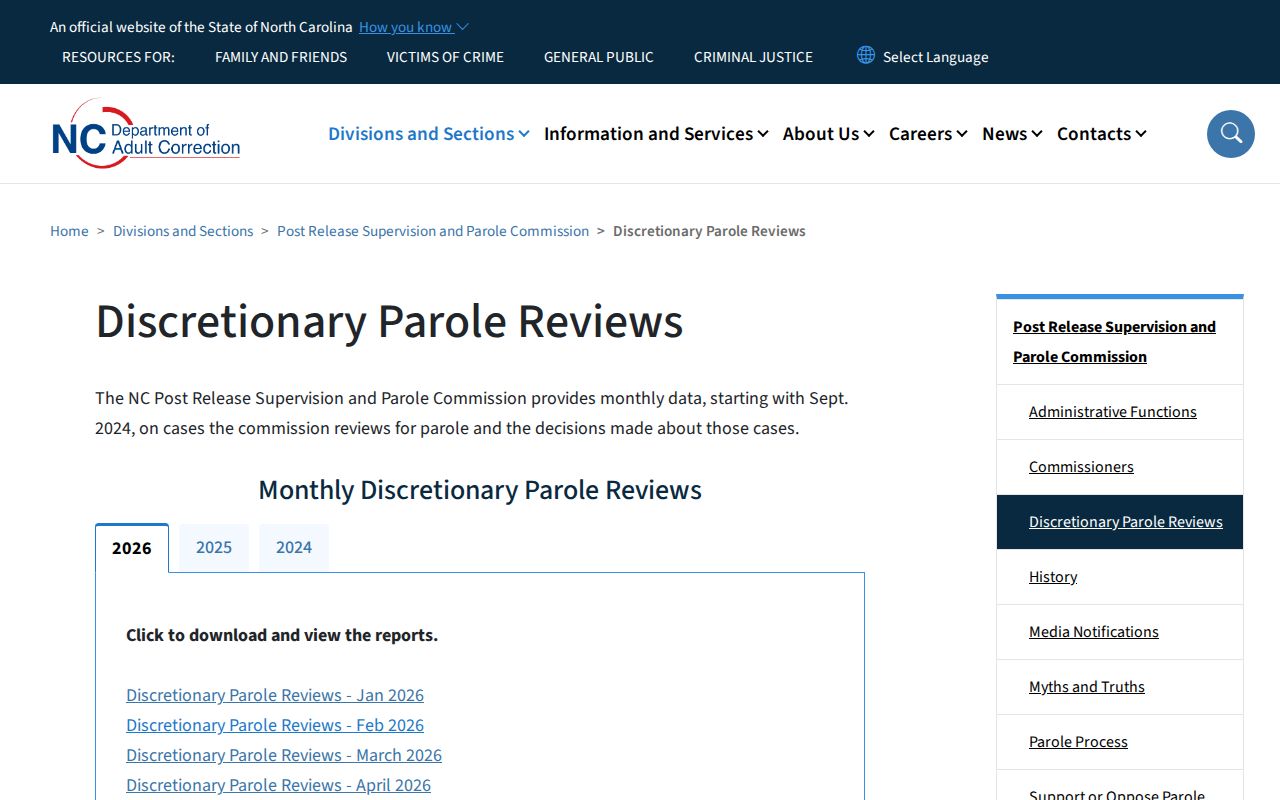
The reports should be read with their own outcome labels and month, then checked against the individual’s NCDAC history. The archive’s starting point creates a firm research limit. A person reviewed before September 2024 will not be found by simply moving backward through these monthly files. For an older case, begin with OPI sentence and parole history, then ask the Commission about the public process for the specific record sought.
- Open the archive and select the report for the month believed relevant.
- Read the report’s identifying details and outcome term rather than relying on a name alone.
- Distinguish a completed decision from an incomplete or suspended decision.
- Search OPI for later incarceration, actual release, and supervision entries.
- Contact the Commission when identity or the procedural meaning remains unclear.
Do not treat absence from the newer archive as proof that no review occurred. Also avoid merging reports across months without preserving each report’s date, since a later action may follow an incomplete or suspended entry. An Incomplete Decision means the Commission needs more information or an evaluation. A Suspend Decision entry means consideration stopped at that time. Neither term should be rewritten as a release grant. Eligibility also does not guarantee release. The archive documents Commission action for the month, while OPI documents the custody and supervision history that follows.
Read North Carolina Parole Outcomes
Parole review terms describe stages, not all-purpose custody answers. A favorable decision may still precede an actual release date. An incomplete decision does not settle the case, and a suspended decision says that consideration stopped then. The safest record statement names the exact published term, the report month, and the access date. It should not add a future date or reason absent from the official record.
| Record entry | What it establishes | Next check |
|---|---|---|
| Parole approved or granted | The Commission approved discretionary release in an eligible case | Verify an actual release and supervision status in OPI |
| Incomplete Decision | More information or an evaluation is needed | Check a later monthly report and Commission process information |
| Suspend Decision | Consideration stopped at that time | Do not infer release; review later official records |
| Actual Release Date in OPI | NCDAC recorded the prison custody exit | Read parole or post-release supervision fields separately |
The NCDAC OPI form supports status, name, offender number, date-of-birth, and other identity fields.
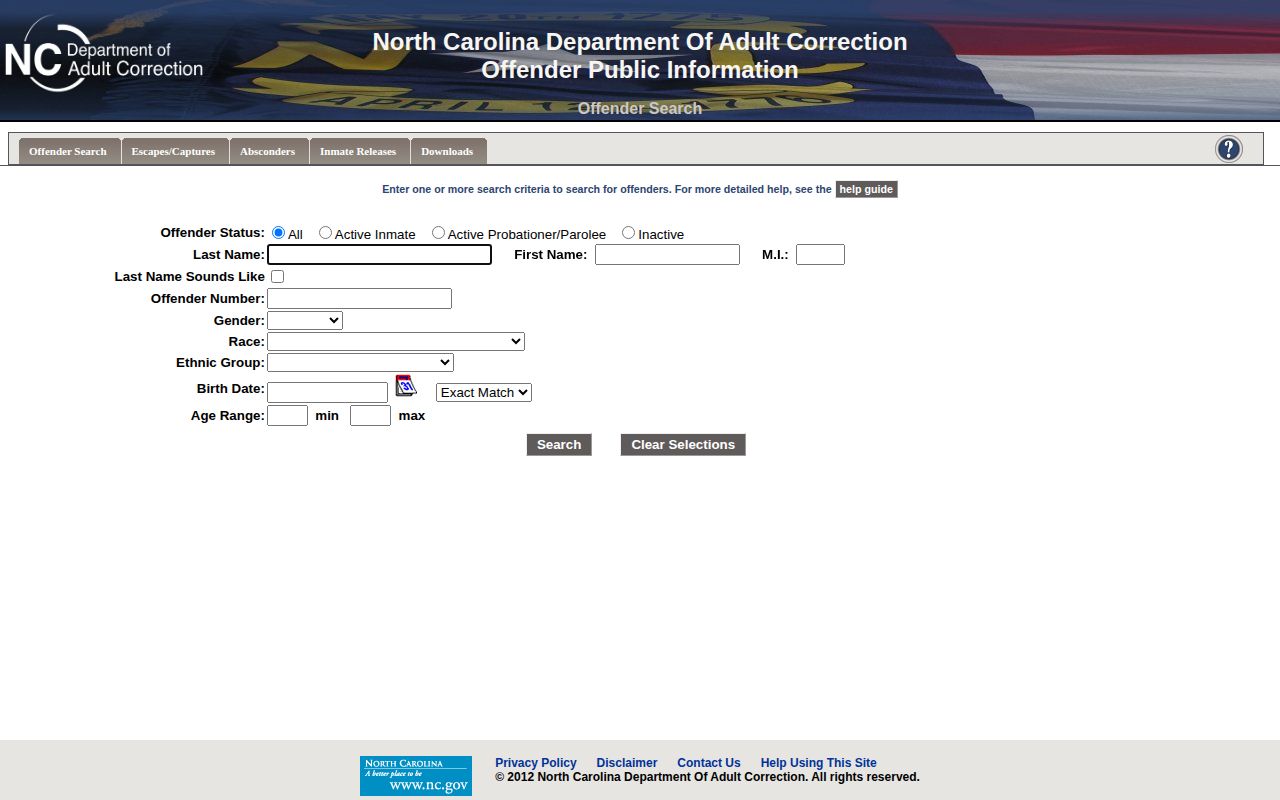
Search “All” rather than only active inmates, since a parole release can move the person from prison custody into active community supervision.
Note: A projected date forecasts a possible custody event; only the actual release field records that the prison exit occurred.
North Carolina’s 1994 Parole Divide
October 1, 1994 is the key dividing date. Structured Sentencing eliminated discretionary parole for offenses committed on or after that date. Most people sentenced under the newer framework reach statutory post-release supervision rather than a discretionary parole release. The Commission still makes parole decisions for eligible older-law and Safe Roads Act cases, and it sets conditions for statutory post-release supervision. Those two roles can make the word “parole” appear broader than the actual release path.
Article 85 of Chapter 15A, including section 15A-1371, governs parole eligibility and release for the cohorts that remain eligible. Article 84A governs post-release supervision. Offense date, sentence history, and the governing law must be read together. A conviction date shown in a search result may help, but it should not replace the actual legal record when eligibility is disputed.
- Eligibility
- The legal ability to be considered for parole; it is not a promise of release.
- File review
- The Commission’s process of analyzing records and voting without a conventional formal hearing.
- Post-release supervision
- A statutory phase after prison for qualifying newer-law sentences.
- Actual release date
- The retrospective NCDAC field showing when the prison custody exit occurred.
When the case falls on the newer side of the divide, projected release and statutory supervision rules are more relevant than a parole calendar. When it falls on the older side, the monthly Commission archive may supply a public review result. Neither route proves full discharge without the later supervision record.
North Carolina Parole Information Meetings
The Commission’s weekly Tuesday meetings give victims and members of the public a defined way to provide information. The Victim Guide describes these meetings and the need to arrange an appointment within the Commission’s process. They should be treated as an input channel. They are not evidence that the parole file will be decided during that meeting, and they do not create a public hearing docket.
This distinction matters when recording a date. A meeting appointment proves only that an information session was scheduled. A monthly report records the Commission’s published review result. OPI later records the person’s prison and supervision status. Keep all three dates separate. Combining them could turn an opportunity to submit information into a false release or decision date.
Questions about what may be submitted, who may attend, or how to arrange a meeting belong with the Commission. Questions about a person’s current prison location belong with NCDAC. A county clerk can provide court records but does not control a Commission parole review. Following that division keeps each answer tied to the office that owns it.
Verify North Carolina Parole Release
A Commission result and a prison release record answer different questions. After identifying a favorable parole result, open OPI and locate the matching incarceration period. Read the actual release date, release type, latest movement, parole dates, and supervision status. A record that shows POST RELEASE/PAROLE with active supervision means prison custody ended while a legal supervision obligation continues. An expired incarceration period may be complete, but another active sentence or hold can still affect the full status.
The parole decision should also be separated from transfers. Movement to another prison, another state, federal custody, or ICE custody is not community release. A county jail departure is not a parole event unless the state record and Commission process support that conclusion. For the post-release office path, the statewide North Carolina parole and probation record explains how to verify the assigned Community Supervision office.
A notification from NC SAVAN can flag a custody change, but it is not the Commission decision record. Verify the alert with the agency that supplied it.
Identity matching is essential. Use the seven-digit offender number if available. With a name search, reconcile date of birth, conviction county, docket, offense history, and demographic fields. Save the report month and access date. A concise verification note can then state the published Commission outcome and the later OPI custody label without blending the two.
North Carolina Parole Record Requests
Commission case and review files carry confidentiality protections, so the public monthly report may be the limit of what can be released. NCDAC identifies basic conviction, time-served, sentence-length, admission, and release-date information as public while treating most offender records as confidential. A request should be narrow. Name the person and offender number, identify the monthly review or release record sought, and ask for existing releasable fields rather than an entire internal file.
The NCDAC Public Records page provides online sources and the agency request route.
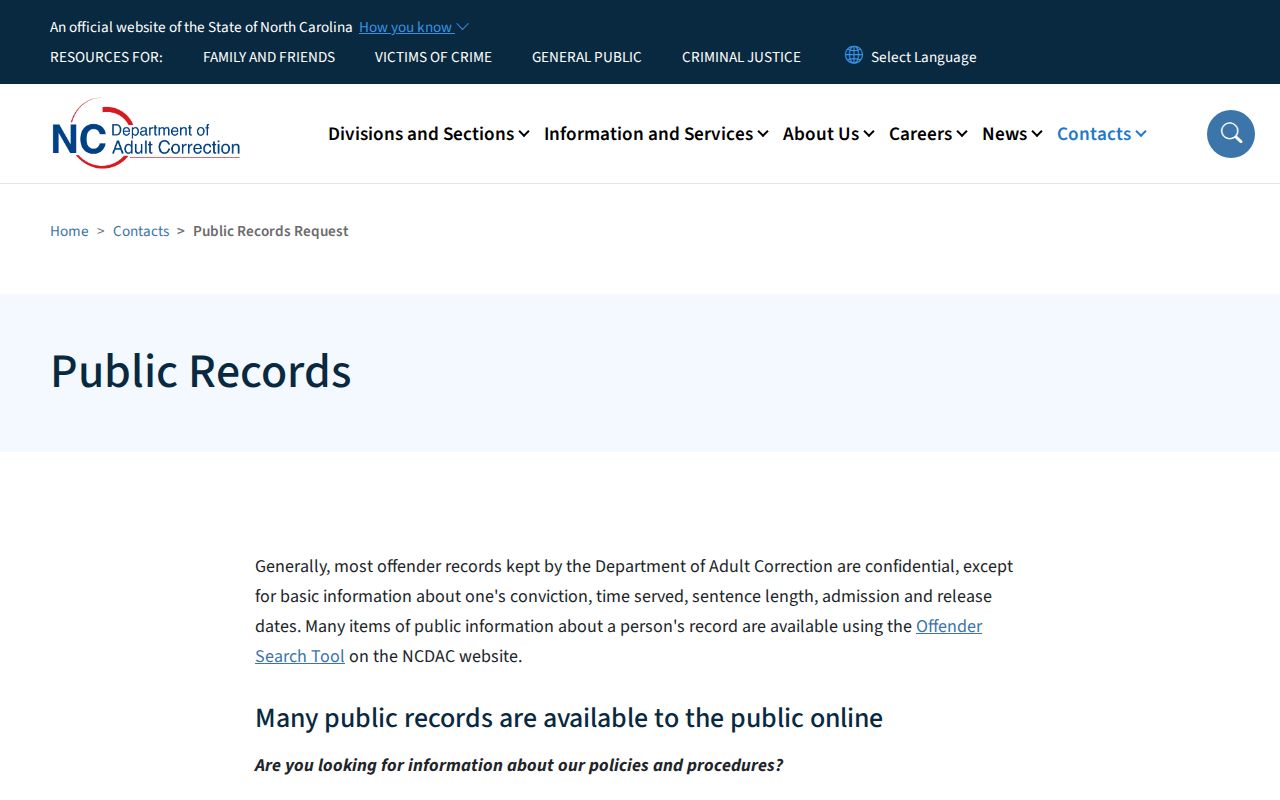
This route can address an existing releasable state record, but it cannot turn a confidential Commission file into a public hearing transcript.
Chapter 132 provides access to North Carolina public records subject to specific exceptions. An agency may separate public fields from confidential material, yet corrections, victim, investigation, medical, and privacy rules still govern. Ask for the legal basis when material is withheld. For county jail records, contact the sheriff or regional jail instead of the Commission. For court dispositions, use the filing-county clerk or the statewide eCourts route. Each custodian can confirm only its own layer.